Trusted By Globally






OneClickBrain builds a living map of your business — definitions, formulas, tribal knowledge — and delivers only the right slice to the right agent. No hallucinations. No conflicting numbers. Just verified, scoped knowledge at every prompt.
Trusted By Globally
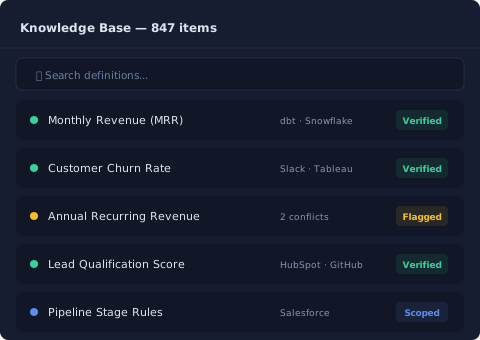
When your sales dashboard and your finance report disagree on what “churn” means, both are useless. OneClickBrain locks down one verified definition per concept. Every agent, every tool, every person pulls from the same agreed-upon truth.
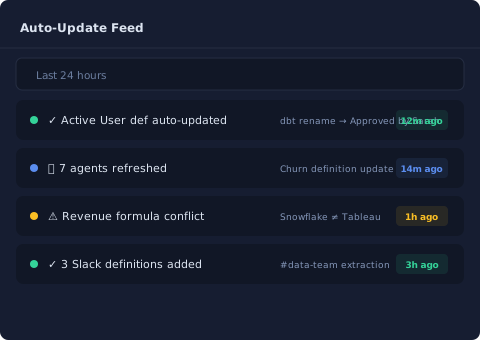
When someone renames a metric in dbt, or a Slack thread settles a definition debate, OneClickBrain catches it. It proposes changes. You review in plain language — accept, reject, or rewrite. The knowledge base never goes stale.
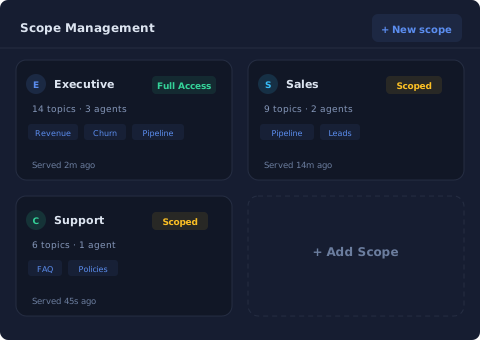
An onboarding chatbot doesn’t need access to board-level revenue data. OneClickBrain lets you fence knowledge by team, role, or task. Each agent gets a tailored view — no over-sharing, no data leaks, no accidental exposure.
OneClickBrain sits at the center of your stack — absorbing metadata from every source, structuring it into verified knowledge, and serving scoped context to whichever agent asks.
Book a demo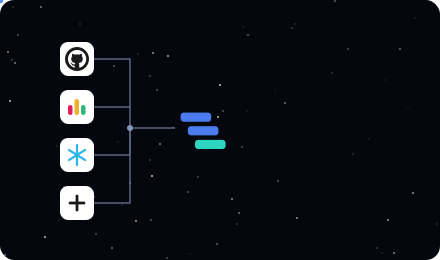
Integrate OneClickBrain to your stack, structured and unstructured. Metadata-first, so nothing moves.
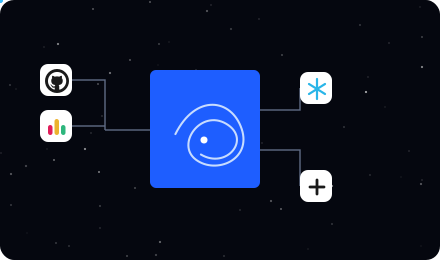
The knowledge layer fills itself from the work already happening across your teams.
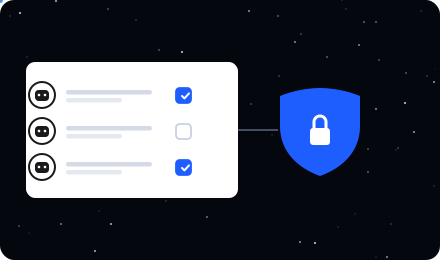
Set what each agent can see. Enforced before anything reaches a model.
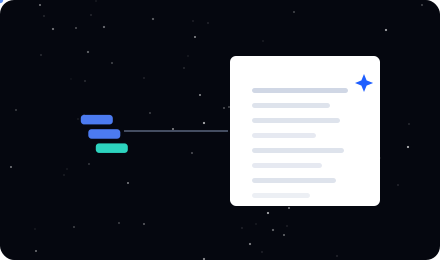
Serve agents just the relevant context, in real time. Up to 10x fewer tokens per query.
Using Claude for customer support? Cursor for engineering? A homegrown RAG pipeline? They all connect to OneClickBrain over MCP or REST. Same tools, same workflows — but now every response is backed by verified organizational knowledge.
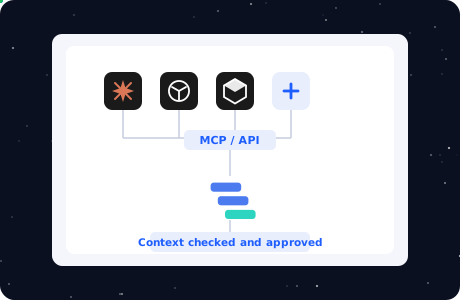
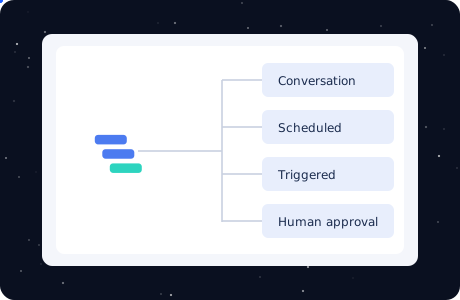
No framework needed. Build knowledge-aware agents directly — set triggers, add human checkpoints, schedule recurring jobs. Every decision the agent makes is logged, traceable, and auditable from day one.
Everything you can do in the dashboard, you can do in code.
REST API, Python SDK, TypeScript SDK, CLI, and native MCP. Manage knowledge, permissions, and agents from wherever your team works.
Store knowledge configs in Git. Open PRs to change a definition. Run diffs before merging. Full GitOps for your intelligence layer.
Push your own classification hierarchy through the API. OneClickBrain adapts to how your business organizes concepts.
Every definition, permission, and config is exportable. Switch models, swap frameworks, or move platforms — your knowledge graph is always yours.
Data warehouses, BI platforms, code repos, wikis, collaboration tools. If your team’s daily work flows through it, OneClickBrain can learn from it.
OneClickBrain operates entirely on metadata and usage patterns. Raw customer data never leaves your environment.

Builds the product and the context engine behind it. Years spent watching teams reconcile the same numbers across a dozen tools — OneClickBrain is the fix.

Brings the commercial and go-to-market side — working directly with enterprise teams on how a governed context layer fits into the stack they already run.
RAG retrieves chunks of raw documents. OneClickBrain maintains structured, verified business knowledge — definitions, formulas, and logic — and delivers only the relevant slice to each agent based on intent and permissions. It’s the difference between searching a library and having an expert brief you.
No. OneClickBrain operates entirely on metadata and usage patterns — schema structures, query histories, collaboration patterns. Your raw customer data, financial records, and sensitive information never leave your environment.
Most teams are live within an hour. Connecting a data source takes about 5 minutes. The initial knowledge scan runs in 5–15 minutes depending on your stack size. After that, you review and approve the extracted definitions.
Yes. Any agent that supports MCP or REST API can connect — Claude, GPT, Cursor, Gemini, or your own custom agents. They keep running the same way; OneClickBrain just feeds them verified context instead of letting them guess.
OneClickBrain flags it immediately and shows you both versions with their sources. You decide which one is correct, or write a new unified definition. Until resolved, agents receive the last verified version — never an unresolved conflict.
No. Every definition, scope, permission, and config you create is exportable as structured JSON or YAML. You can switch AI providers, change agent frameworks, or move platforms — your knowledge graph travels with you.
Give every agent, every workflow, and every team member access to the same verified intelligence — scoped, governed, and always current.